The Escalating Threat of Iranian Drones to US Assets in the Gulf
The Persian Gulf remains a crucible of geopolitical tension, a critical waterway for global trade, and a region where the interests of various international actors frequently intersect. In this volatile environment, the United States 5th Fleet, headquartered in Manama, Bahrain, serves as a pivotal force for regional security and stability. Recent years have seen a significant evolution in the nature of threats faced by US and allied forces, particularly from unmanned aerial vehicles (UAVs) or drones. While specific details of reported incidents can be scarce, the mere prospect of Iranian drones targeting a strategic hub like the US 5th Fleet Headquarters underscores a new dimension of asymmetric warfare and necessitates a comprehensive look at defense strategies and regional implications.
The proliferation of advanced drone technology has fundamentally altered the landscape of modern conflict. Nations and non-state actors alike are increasingly leveraging these relatively inexpensive, yet highly effective, platforms for surveillance, reconnaissance, and precision strikes. Iran, in particular, has made significant strides in developing and deploying a diverse array of UAVs, including the Shahed series, which have garnered international attention for their capabilities and alleged use in various regional conflicts. These developments pose complex challenges for traditional air defense systems and raise critical questions about the security of vital military installations.
The Evolving Iranian Drone Program and its Regional Impact
Iran's drone program has matured considerably over the past decade, moving from basic surveillance capabilities to more sophisticated armed platforms. Drones like the Shahed-136, often referred to as "loitering munitions" or "kamikaze drones," are designed to strike targets at considerable distances. These systems offer several advantages to Iran: they are relatively low-cost to produce, provide a degree of deniability in proxy attacks, and can overwhelm conventional air defenses through swarm tactics or by exploiting radar blind spots.
The strategic significance of the US 5th Fleet HQ cannot be overstated. It is the command center for naval operations across the Arabian Gulf, Red Sea, Arabian Sea, and parts of the Indian Ocean, safeguarding freedom of navigation and countering illicit activities. An alleged or actual drone attack on such a facility would represent a major escalation, testing the resolve of international actors and highlighting the vulnerabilities of even well-protected installations. The increasing range and precision of these drones mean that no fixed asset in the region can be entirely considered outside their potential operational envelope.
The regional impact of Iran's drone capabilities extends beyond direct threats to US forces. These drones have reportedly been supplied to various proxy groups across the Middle East, further destabilizing already fragile regions and enabling non-state actors to project power in unprecedented ways. This proliferation complicates regional security dynamics, making it harder to attribute attacks and increasing the risk of miscalculation.
US Defensive Posture and the Crucial Role of Air Power
In response to these evolving threats, the US military maintains a layered defense system across its assets in the Persian Gulf. This includes advanced radar systems, anti-missile defenses such as the Aegis combat system on naval vessels, and sophisticated counter-UAS (C-UAS) technologies designed to detect, track, and neutralize hostile drones. However, the sheer volume and varied characteristics of modern drones mean that no single defense system is foolproof.
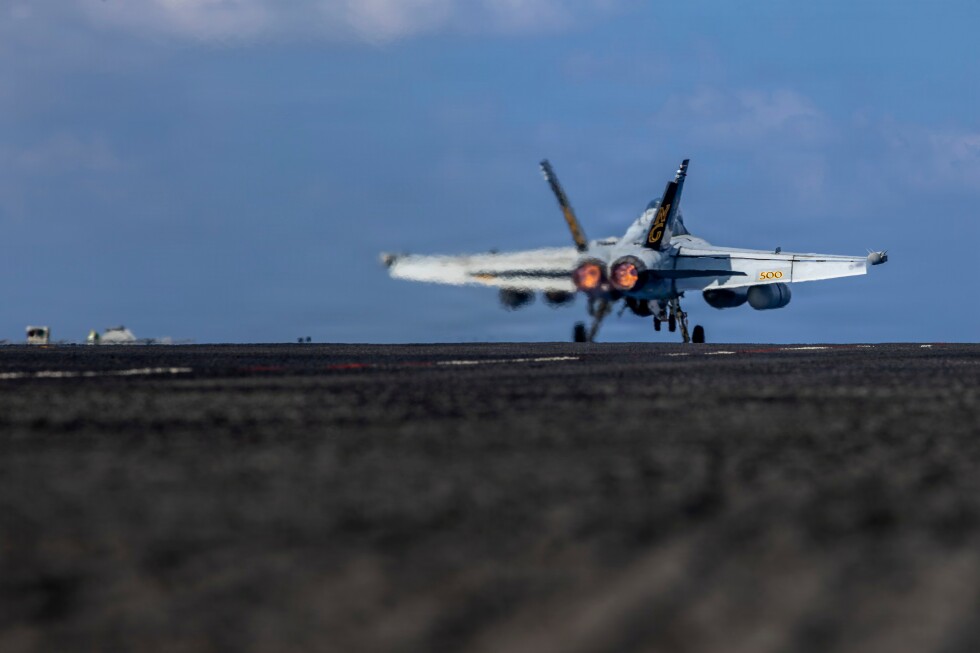
A critical component of this defensive posture is air superiority, maintained by the presence of US and allied fighter jets. These aircraft are not only vital for offensive operations but also serve as a crucial interceptor force against aerial threats, including drones and cruise missiles. Airbases throughout the region host these invaluable assets, providing rapid response capabilities. For instance, the presence of **сша истребитель кувейт** (USA fighter Kuwait) highlights the strategic importance of regional allies. Kuwait, a key partner, hosts significant US military air assets, including fighter squadrons. These F-15s, F-16s, and increasingly F-35s, stationed at airfields like Ali Al Salem Air Base, provide a critical aerial shield, capable of patrolling vast expanses of airspace and responding swiftly to emerging threats. Their speed, advanced radar, and missile capabilities make them essential in countering fast-moving or low-flying drones before they can reach sensitive targets. The cooperation between US forces and host nations like Kuwait is paramount for maintaining this vital air defense umbrella.
The coordination between ground-based air defenses, naval assets, and airborne fighter patrols forms a comprehensive network. This integrated approach aims to create multiple points of interception, increasing the probability of neutralizing a threat. Training exercises frequently focus on simulating drone attacks and refining response protocols, ensuring that personnel are prepared for various scenarios.
Geopolitical Ramifications and Regional Stability
An actual attack on the US 5th Fleet HQ would carry immense geopolitical ramifications. It would undoubtedly be perceived as a direct act of aggression, potentially triggering a significant response and escalating tensions to unprecedented levels. Such an event would send shockwaves through international markets, particularly affecting oil prices, and could severely destabilize the entire region.
Regional allies, including Bahrain, Kuwait, Saudi Arabia, and the UAE, would face heightened security concerns. Their own defense capabilities and alliances would be scrutinized, and there would be increased pressure to bolster collective security measures. The incident would also test diplomatic channels and international efforts to de-escalate tensions in the region, which have long been focused on preventing open conflict. The broader US strategy in the Middle East, which aims to deter aggression, support partners, and ensure freedom of navigation, would face a significant challenge, potentially leading to a re-evaluation of force posture and engagement tactics.
Enhancing Military Base Security Against Asymmetric Threats
The hypothetical scenario of a drone attack on a major military headquarters provides critical lessons for enhancing security against asymmetric threats. Modern warfare increasingly involves non-traditional adversaries and methods, requiring a shift in defensive thinking.
*
Integrated C-UAS Systems: Deploying advanced counter-UAS systems that combine radar detection, electro-optical/infrared tracking, electronic warfare jamming, and kinetic interceptors is crucial. These systems need to be seamlessly integrated with existing air defense networks.
*
Perimeter Defense Augmentation: Traditional perimeter security measures need to be augmented with drone-specific defenses. This includes passive measures like camouflage and active measures like drone detection fences or nets.
*
Personnel Training and Readiness: Regular, realistic training for personnel on identifying and responding to drone threats is essential. This includes understanding drone flight patterns, potential attack vectors, and proper engagement protocols.
*
Intelligence Sharing and Collaboration: Enhanced intelligence sharing among allies in the region, including countries hosting US forces, is vital to detect potential threats early and to understand the evolving capabilities and tactics of adversaries.
*
Technological Innovation: Continuous investment in research and development for next-generation C-UAS technologies, including AI-driven detection, laser defense systems, and networked sensor arrays, is paramount to staying ahead of evolving threats.
For a deeper dive into the specific defensive measures and strategic planning needed, consider exploring the detailed analysis in
Military Base Security: Lessons From Bahrain Drone Incident. Understanding the nuances of these defenses is crucial for protecting critical infrastructure.
Analyzing Iran's Drone Strategy
Iran's use of drones is a cornerstone of its asymmetric warfare doctrine. This strategy aims to challenge technologically superior adversaries by leveraging low-cost, high-impact capabilities that can inflict disproportionate damage or psychological impact. Drones offer several advantages in this context:
*
Cost-Effectiveness: Drones are significantly cheaper to produce and deploy than traditional manned aircraft or precision missiles, allowing Iran to maintain a credible threat without matching adversary spending.
*
Deniability: When used by proxy groups, drones can offer a degree of plausible deniability, making it harder to directly attribute attacks to the Iranian state and complicating retaliatory responses.
*
Psychological Impact: Even unsuccessful drone incursions can generate significant psychological impact, forcing adversaries to divert resources to defense, disrupting operations, and creating a sense of vulnerability.
*
Swarming Tactics: The ability to launch multiple drones simultaneously can overwhelm conventional air defenses, creating a complex challenge for tracking and interception.
The continuous development and deployment of these drones underscore Iran's commitment to this strategic approach. For a more detailed examination of these tactics and their implications, refer to
US 5th Fleet Under Attack: Analyzing Iran's Drone Strategy.
Conclusion
The prospect of Iranian drones targeting the US 5th Fleet Headquarters in Manama, while a hypothetical scenario in the absence of detailed confirmed reports, highlights a very real and growing threat in the Middle East. The evolution of drone technology, coupled with regional geopolitical tensions, necessitates a robust and adaptable defense strategy. The ongoing presence of US air power, exemplified by assets like the **сша истребитель кувейт** (USA fighter Kuwait) and other regional deployments, remains a critical deterrent and a vital component of any layered defense. Maintaining vigilance, investing in advanced counter-UAS technologies, and fostering strong international partnerships are all essential elements in safeguarding regional stability and protecting vital military assets against these evolving asymmetric challenges. The future of security in the Gulf will depend significantly on the ability to effectively counter the persistent and increasingly sophisticated threat posed by unmanned aerial systems.